Angola Travel Guide 2026 | Kalandula Falls & Pedras Negras for Indian Passport Holders
Published on July 13, 2026
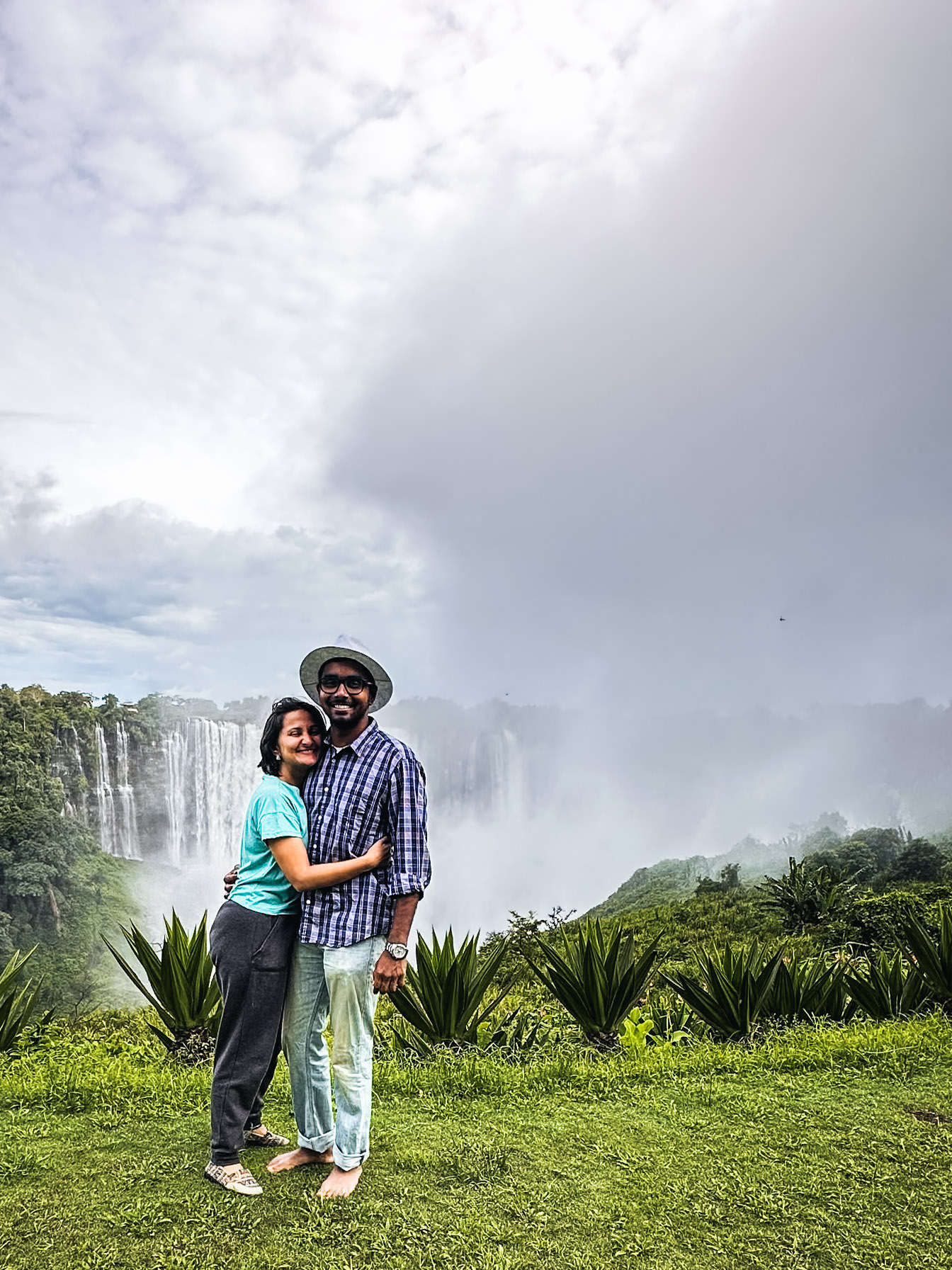
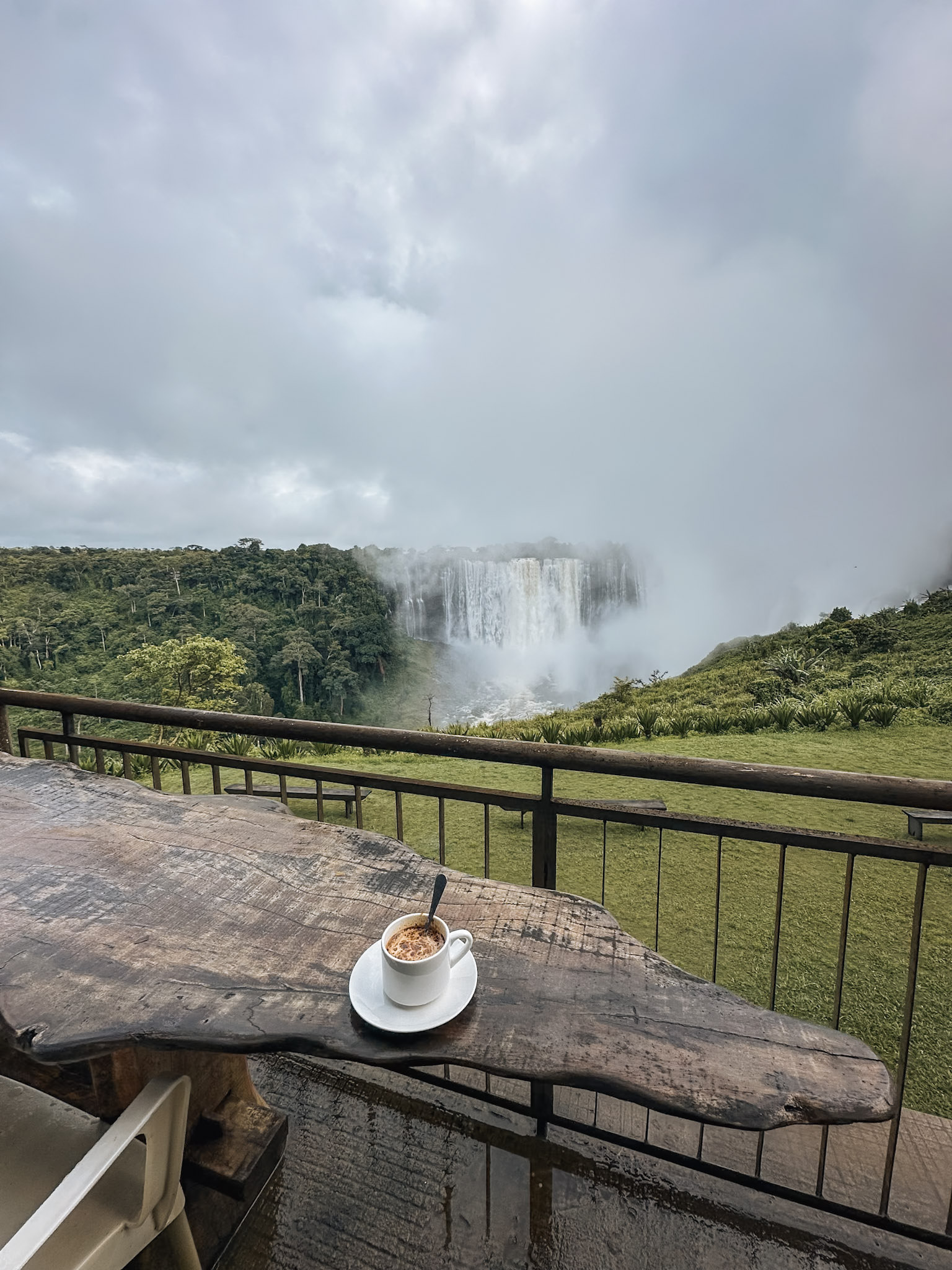
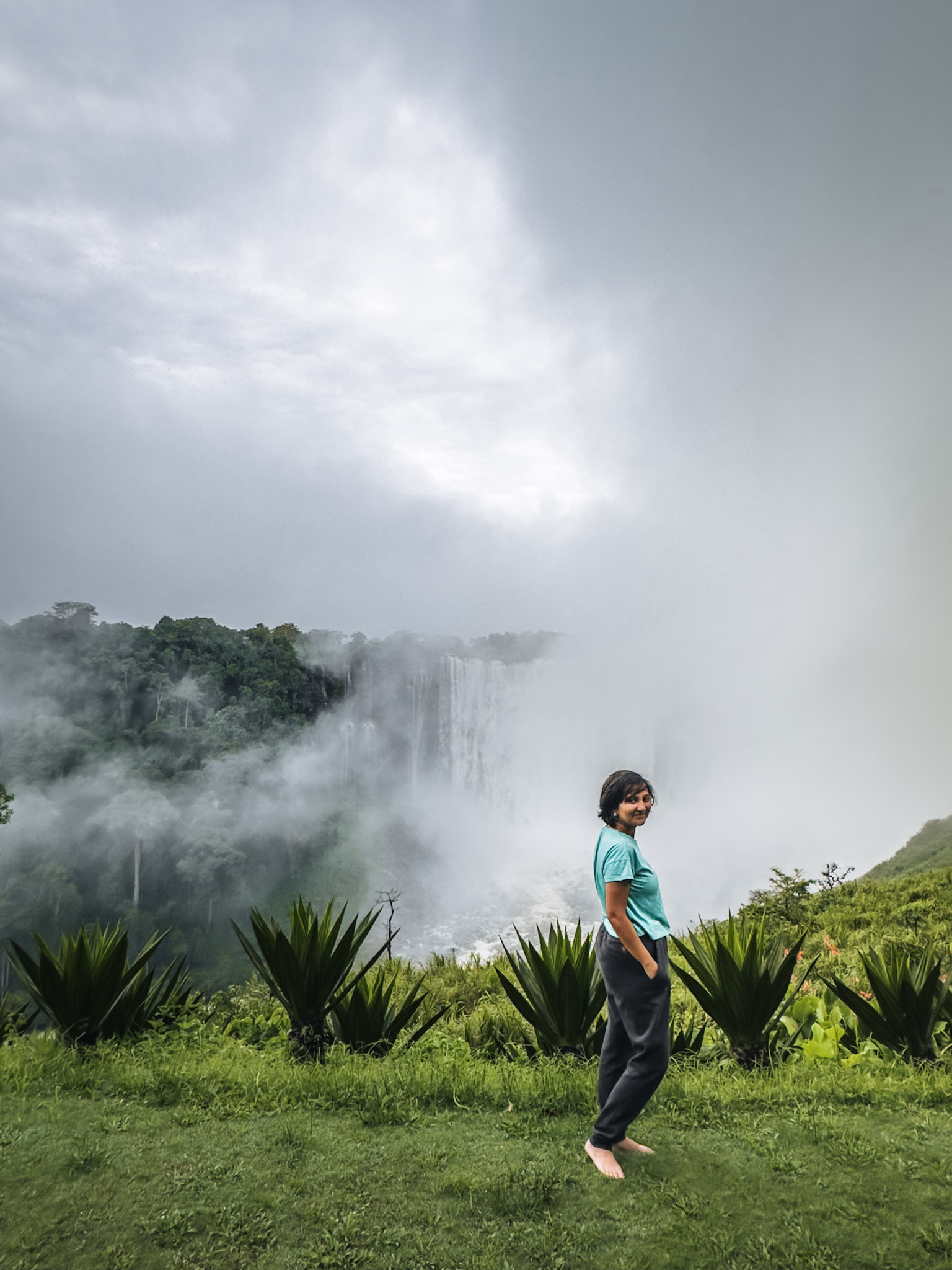
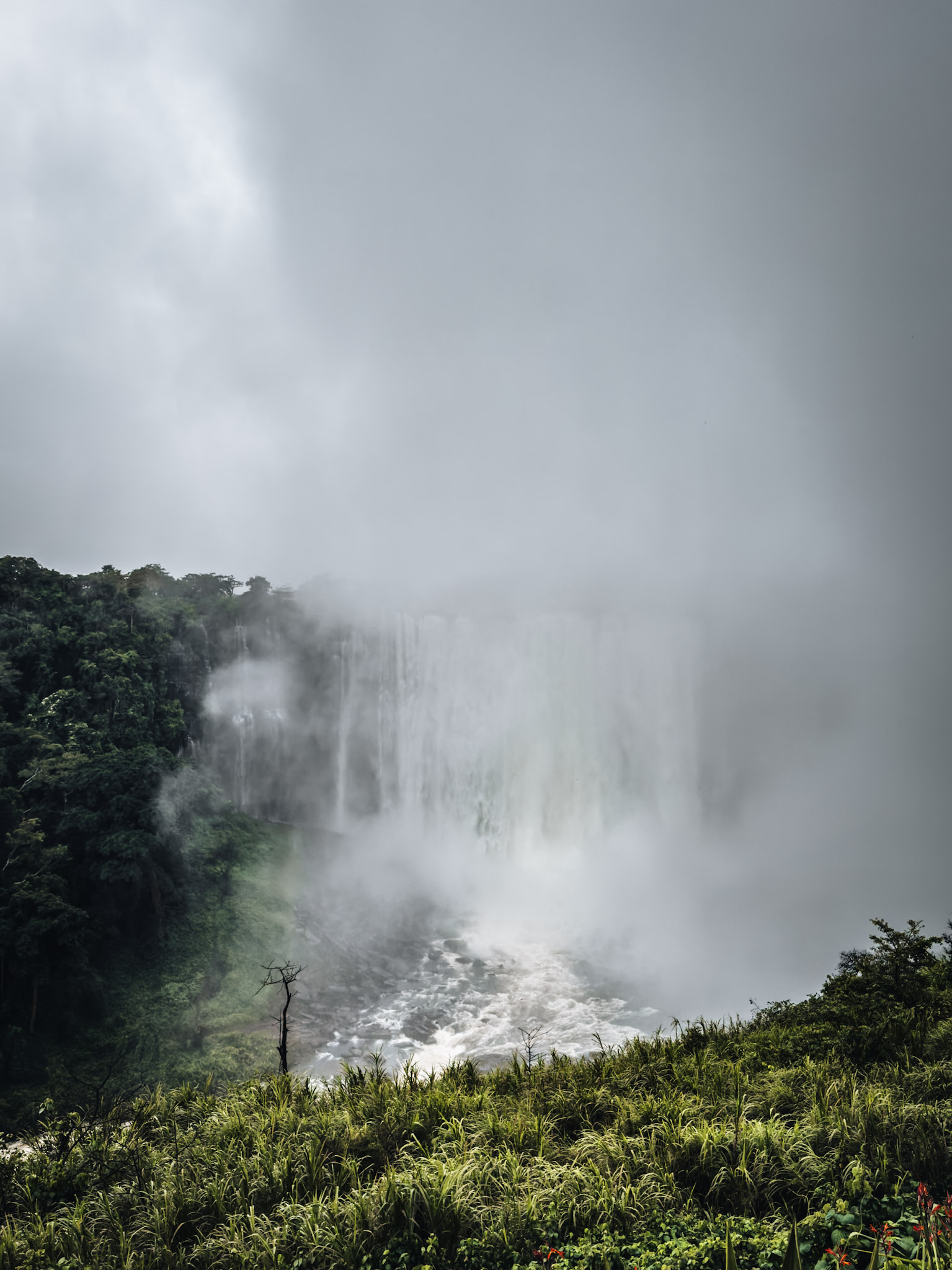
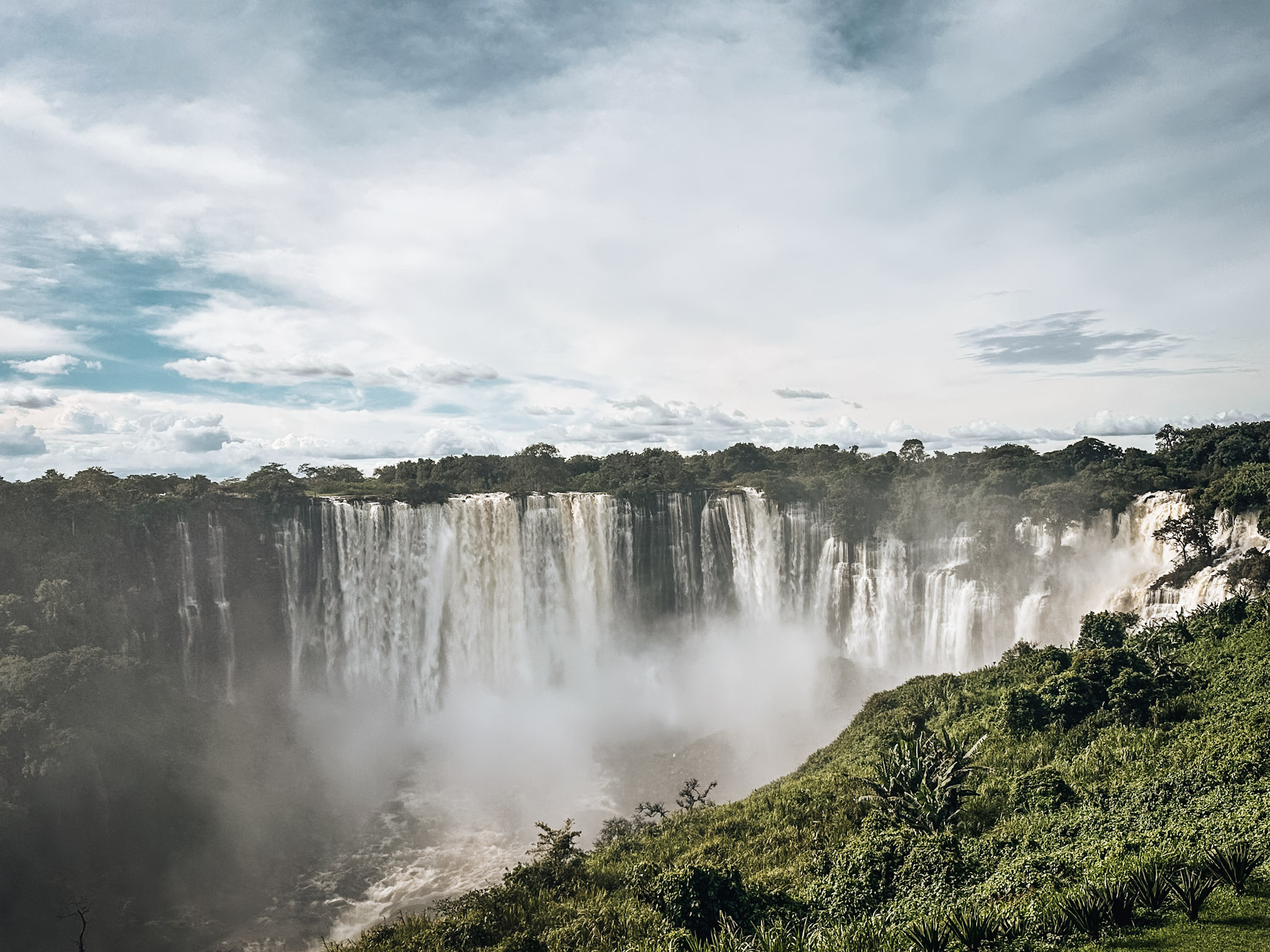
We woke to the thunder. Not metaphorical thunder - actual, physical vibrations running through the walls of our room at Pousada Calandula, where 105 meters of falling water created a roar that no amount of earplugs could mute. My coffee was steaming on the balcony. The spray from Kalandula Falls painted everything in a misty haze; and I thought: this is why we travel to places like Angola. Not for Instagram. Not for the “seen it, done it” feeling - but for moments where you feel so small, and genuinely grateful.
Angola doesn’t appear on most traveler itineraries. When it comes to Africa, everyone is busy chasing Kenya, Morocco, Egypt, Tanzania or South Africa, and those are all wonderful, no doubt at all. But I’ve been to 40+ countries across Africa - and I’m telling you: Angola in 2026 is one of those rare places where you can have incredible natural experiences with almost no other tourists. The Kalandula Falls are one of Africa’s largest waterfalls by volume. Pedras Negras - towering basalt monoliths rising from the savanna - sit quietly with the ghosts of Rainha Ginga’s resistance. The entire country is still figuring out tourism though, which means you’re not competing with crowds, inflated prices, or commercialized experiences.
This guide covers everything a busy Indian traveler needs: how to actually get a visa (spoiler: it’s easier than you think), how to reach Kalandula from Luanda, where to sleep with a literal waterfall view, and how to travel responsibly in a place where your presence genuinely matters. I’m writing this fresh from our trip in 2025, with real prices, real logistics, and honest talk about rough roads, basic accommodation, and why that’s exactly the point.
Angola Visa for Indian Travelers 2026: The Actual Process
Let’s start with the thing that stops most people: the visa. India-Angola travel has gotten dramatically easier. Indian passport holders can apply for Angola e-visa online (official portal: www.visto.ao) or get a visa on arrival at Luanda airport with proper documentation, which is what we did. The government fee fluctuates, so please be sure to check the latest Embassy rules before traveling.
For a visa on arrival, you need: valid passport (6+ months validity), proof of accommodation in Angola, proof of return flight bookings, and proof of sufficient funds. No embassy visit needed. This is genuinely simpler than getting visas for most Southeast Asian countries, yet most Indian travel blogs haven’t caught up.
Can Indian passport holders get Angola visa on arrival in 2026?
Yes, though e-visa is recommended, I don’t trust the process. If you’re flying into Luanda with all required documents (passport, return flight, accommodation proof, bank statement), immigration can stamp you in immediately. We’ve heard mixed reports about consistency, but we had no issues on arrival. If you are applying ahead of time, I’d recommend applying for e-visa 2–3 weeks before travel. It costs slightly more but eliminates airport stress. The visa is valid for 30 days, single entry.
How to Actually Get to Kalandula Falls from Luanda
Here’s where most guides get vague. “Take a flight or drive,” they say. Reality is messier and more interesting. Luanda to Kalandula is roughly 350 km. You have three options: (1) Domestic flight to Malanje (when available) plus 1–2 hour road transfer. This is the fastest. (2) Full road drive (6–8 hours depending on road conditions, heavily potholed in places. Typically a 3-4 day tour of the city plus over night in the falls, and a stop Pedras Negras costs $600-700 per person, slightly lower if there is a group. This is the option we took (3) Combination: fly to Malanje, hire a driver for the final transfer, stay overnight in Malanje before continuing.
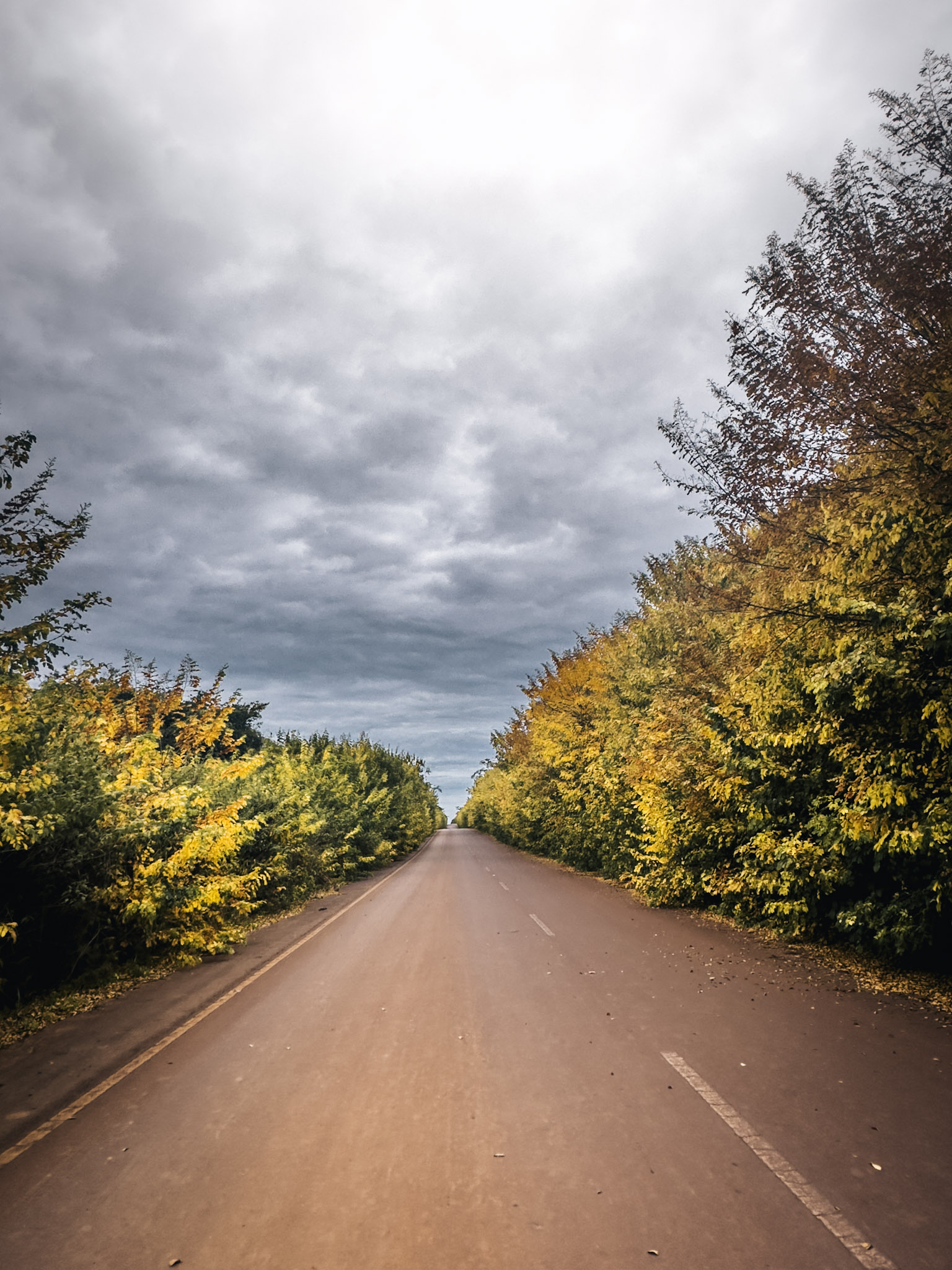
Given the long distance, the not-so-great roads, there is much value in hiring a local driver: you’re not just getting transport; you’re getting safety, while you kick back.
Should Indian travelers hire a private driver or use shared transport to Kalandula?
Hire a driver. You’ll want: flexibility if roads are worse than expected, someone who knows the safe routes, and the ability to stop at villages for lunch. Shared vans are cheaper but involve waiting, uncertain departure times, and shared vehicle concerns. For 2–3 people, a nice 4x4 with a reliable driver splits to ₹600, it is vastly more comfortable and safe than hopping on buses.
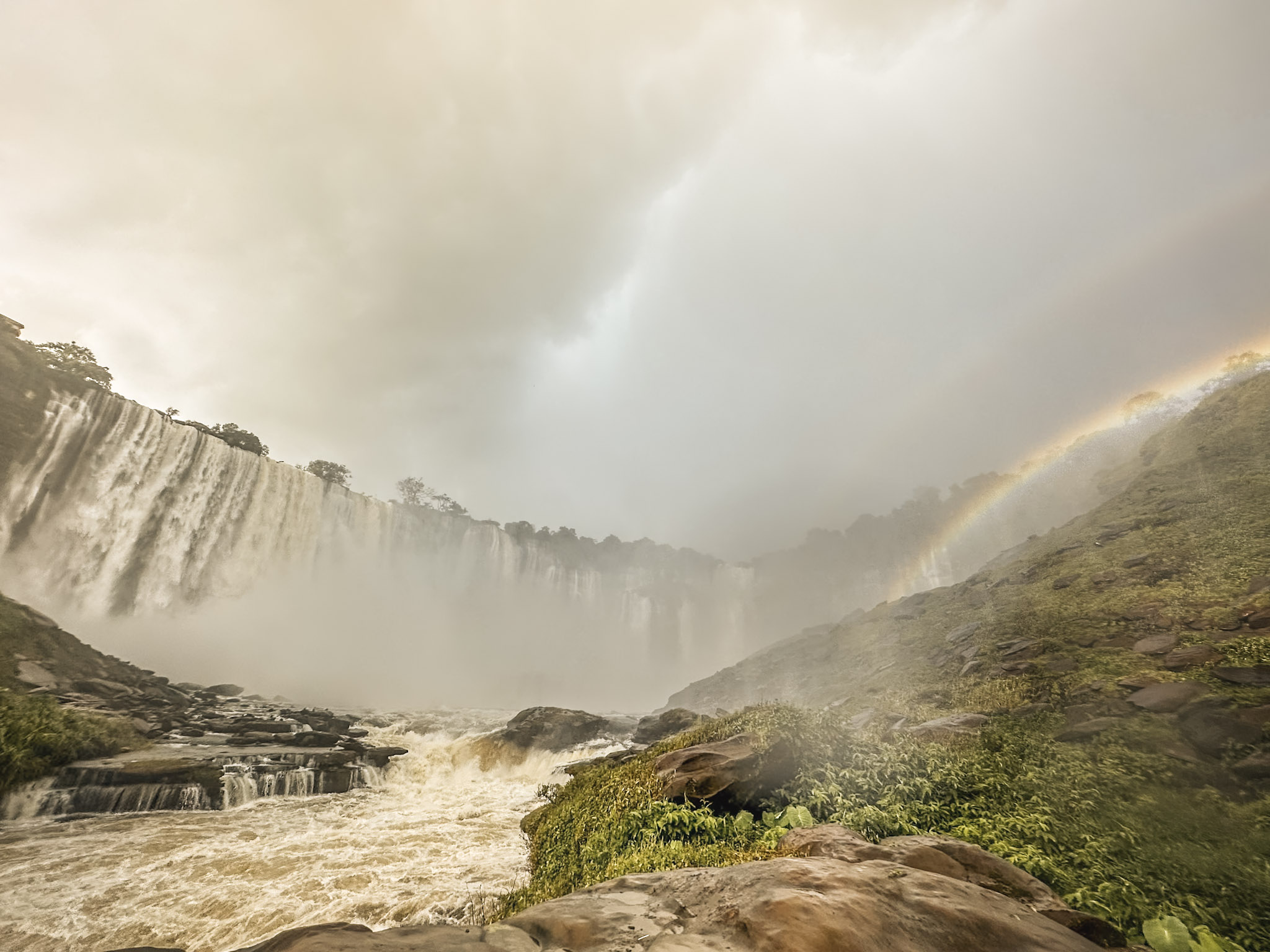
Days 1–2: Kalandula Falls—Waking to the Waterfall
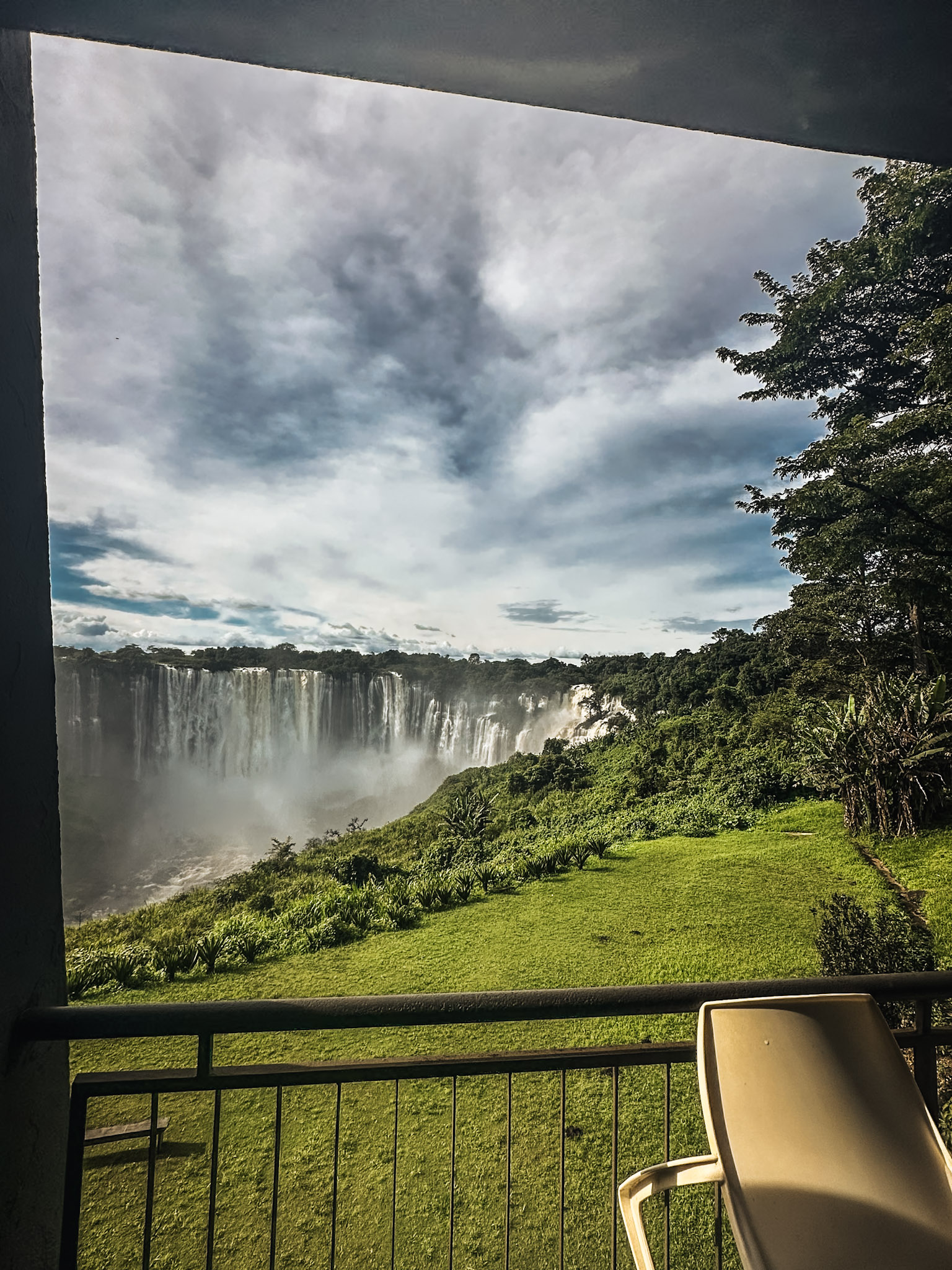
There’s only one accommodation within reasonable walking distance of Kalandula Falls: Pousada Calandula. A 10-room hotel that feels like it’s been there forever, all terracotta walls and Portuguese tiles, run by a local family. We booked the falls-front room.
The room itself was basic and in need of an uplift: double bed, cold-water bathroom (hot water available by request), veranda with two chairs facing directly at the falls. That’s the best part, with the windows open, spray drifts in, and you realize you’re sleeping to a soundtrack of 105 meters of water falling. Wake at dawn. The roar is different before sunrise - quieter, somehow, because the world hasn’t started yet.
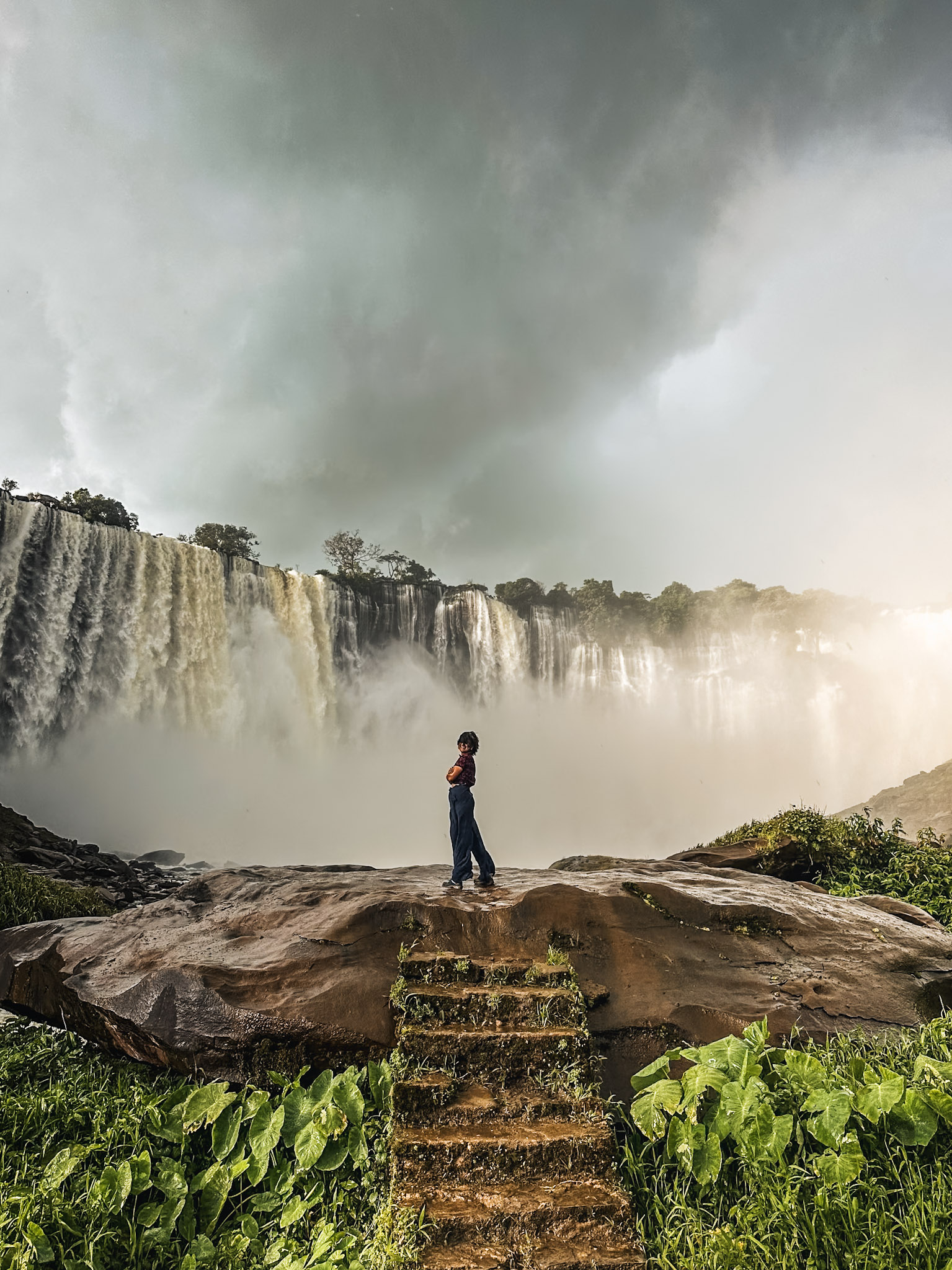
Coffee in the restaurant (Portuguese-style, strong, arrived with a pastéis de nata). Walk to the main viewpoint (100 meters from the hotel). Light is just hitting the falls. The volume of water is incomprehensible.
Can you hike to the base of Kalandula Falls safely?
Yes, with a local guide. A steep, rocky trail descends about 30-40 minutes to the base. Rocks are slippery. The reward: being underneath 400 meters of falling water, feeling the spray hit like rain, understanding scale in a way no viewpoint captures. Always use the hotel’s recommended guide, tip around $20.
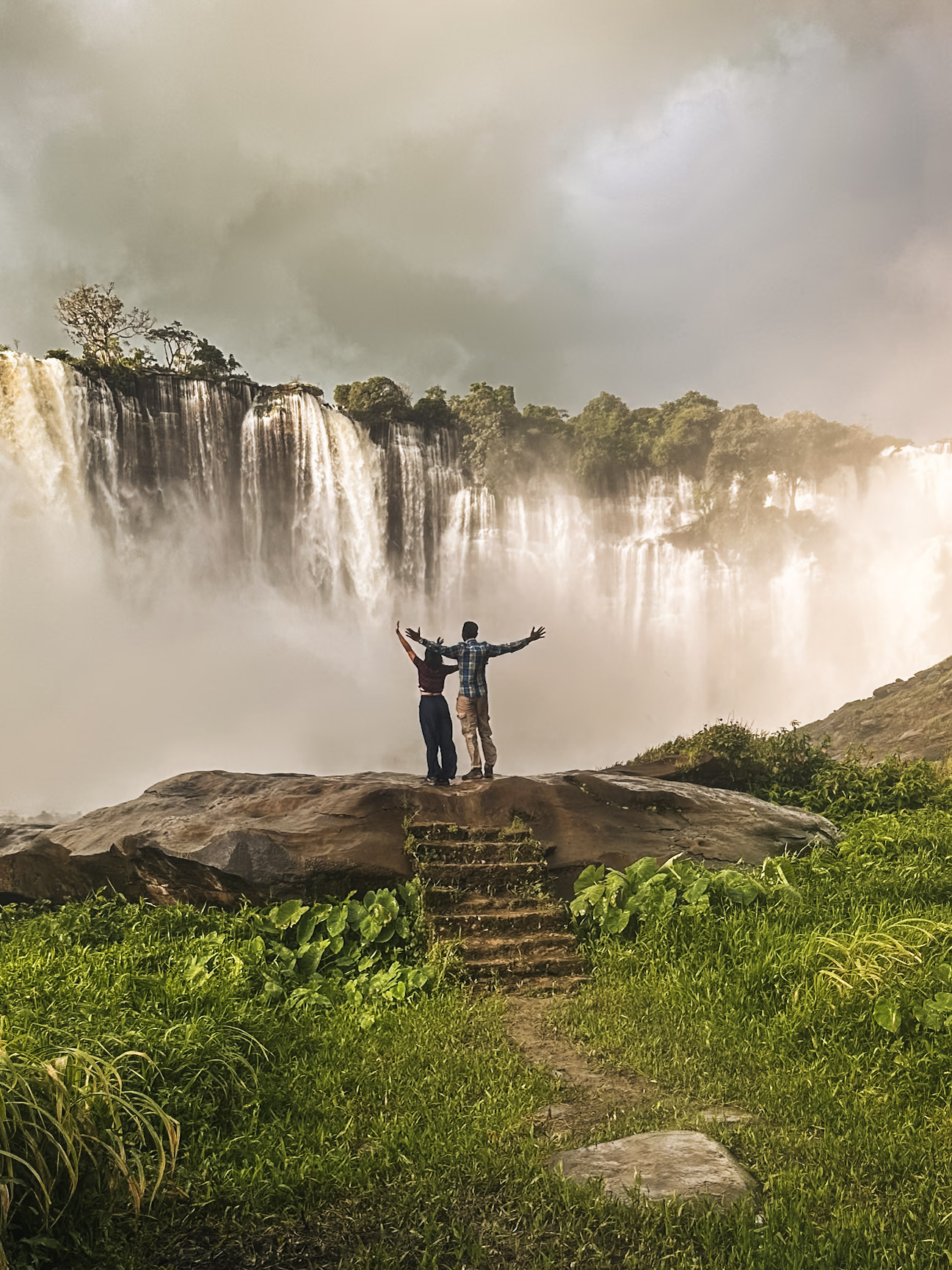
The high water season (March–June) is riskier. We went mid-April, when water flow was substantial but not torrential.
Day 3: Pedras Negras - Historic Rock Formations
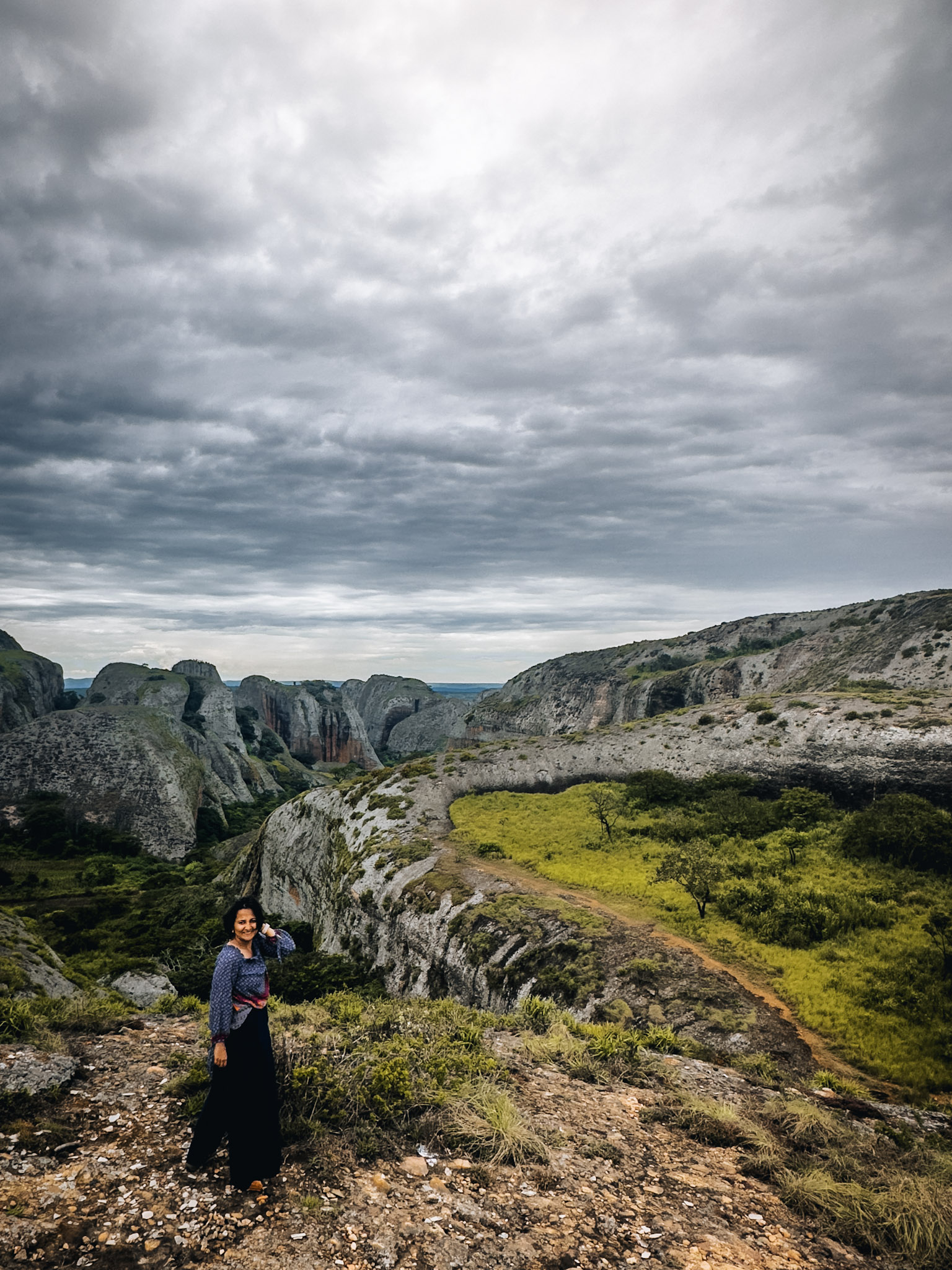
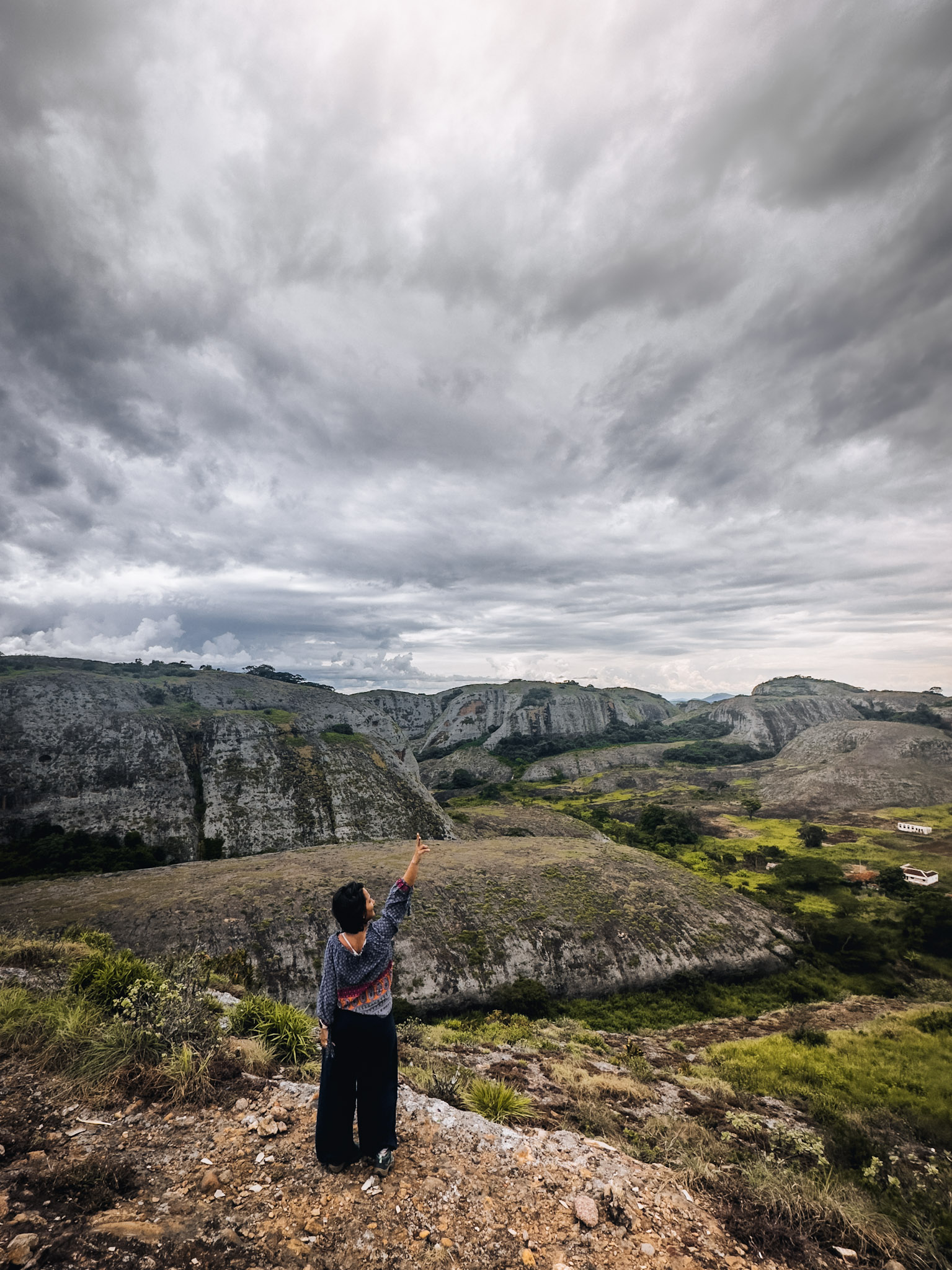
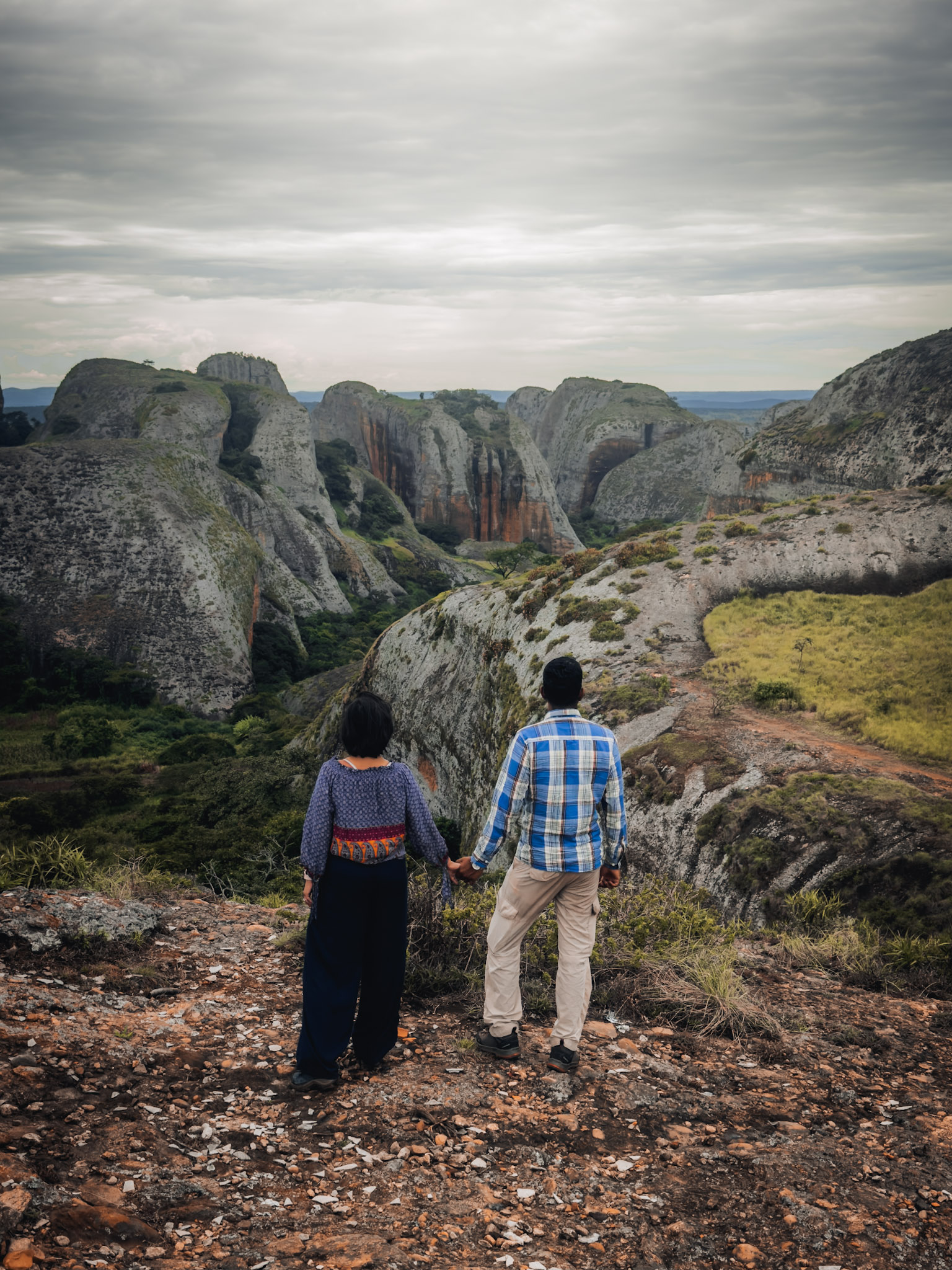
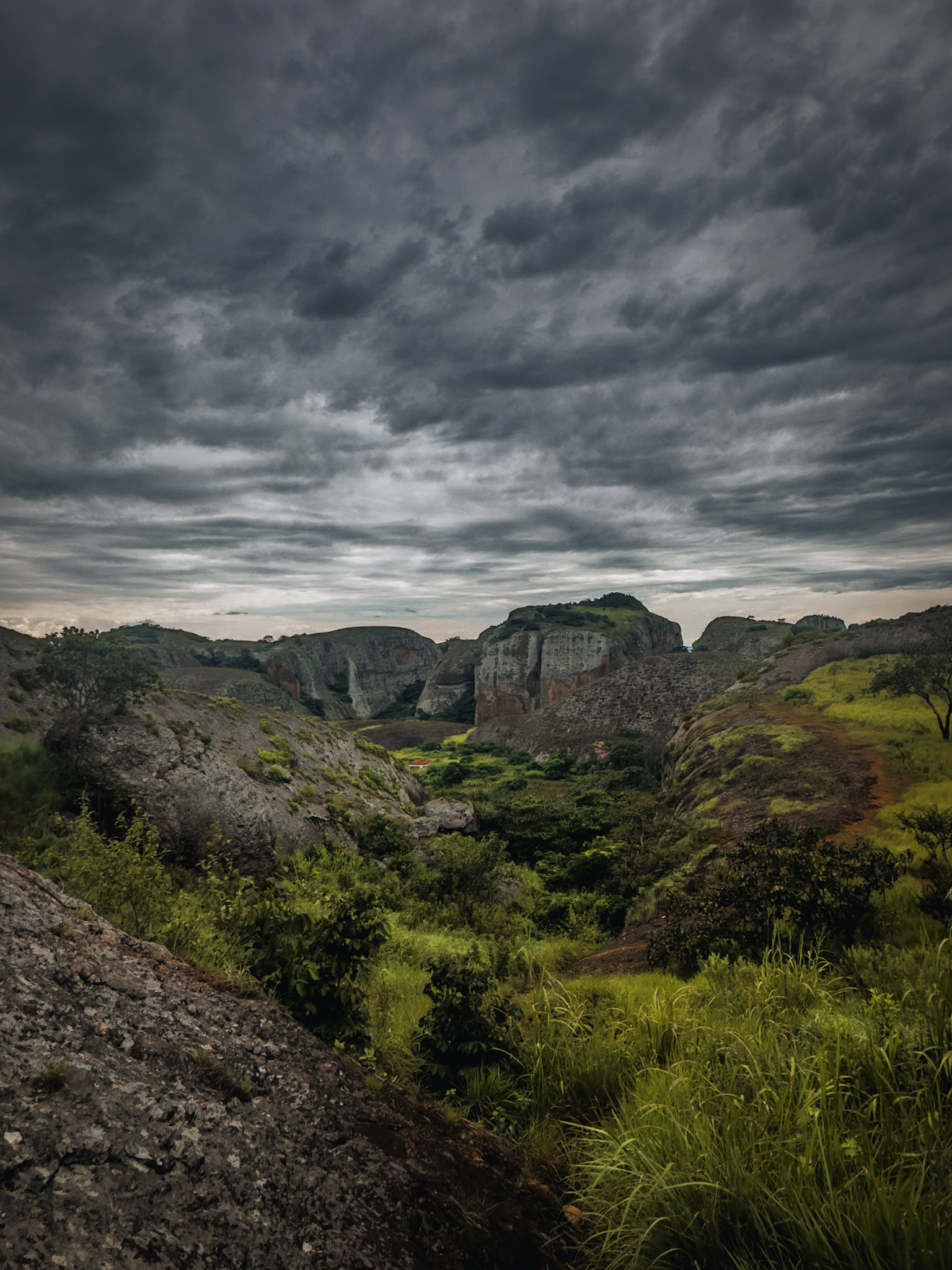
Forty kilometers from Kalandula, Pedras Negras rises from the savanna like someone forgot to finish demolishing a castle. Basalt monoliths, black and ancient, some 40+ meters high. This isn’t a waterfall tourism site. It’s a place with history: Rainha Ginga, the 17th-century Angolan queen, led resistance from places like this. The rocks hold that story. You feel it when you’re there—not in a spooky way, but in the sense that you’re standing where something real, something important, happened.
The hike to the top is 45 minutes up loose scree and stone steps worn smooth by centuries of feet (or a few hundred tourists, hard to know). No guardrails. No safety infrastructure. Just a path and your own judgment. We climbed in the late afternoon. The light was turning golden. The wind picked up, wind always seems stronger at height. From the top, you see: savanna in every direction, a small settlement of homes clustered below (Pedras Negras village), and absolutely no other tourists. We sat for an hour. No one arrived. No tour buses. Just us and the sheer wideness of untapped Africa.
What’s the best time of day to visit Pedras Negras?
Late afternoon through sunset. The light is golden. The rocks turn into deep charcoal. The air cools. The village below comes alive with people returning from fields. Come early morning if you want solitude (less likely) or energy (rock-climbing in heat is brutal). Bring 2–3 liters of water. Bring a guide from the hotel - paths are unmarked; it’s easy to get lost. Budget 3–4 hours total (including descent).
Day 4: Return to Luanda or Onward Travel
Use the fourth day as a buffer. Either a slow drive back to Luanda (stop for lunch, arrive late afternoon) or take the afternoon flight from Malanje if onward travel is planned. We returned to Luanda, used the evening to decompress at our hotel (Hotel Presidente, midtown, solid 4-star comfort), and flew out the next morning. The drive back felt different—we were quieter, more reflective. Paulo played Portuguese music. The landscape hadn’t changed, but we had.
Angola Travel 2026: Costs, Timing & Practical Reality
Flights Luanda: $1000-1200 (depending on connections, airlines, advance booking). We flew direct with Emirates. Accommodation (Pousada Calandula, falls-front): $230 (2 nights). Meals: restaurant meals $25, street food $5. Guides and activities: Kalandula hike with guide, Pedras Negras hike. Driver hire (Luanda-Malanje-Kalandula-back): $500-600 per person, for a group of 2. ATMs work in Luanda and Malanje (Plan Credit cards sometimes rejected - carry cash as backup). Total 4-day budget for two people: approximately $2700 including flights, accommodation, meals, activities, and transport.
What’s the best time to visit Kalandula and Pedras Negras?
March–September (dry season): roads are passable, skies are clear, and water flow is optimal. We went in April (shoulder season), which offered warm days, dramatic water flow, and no rain. May–August is peak dry, with cooler mornings and reliable conditions. October onwards brings rain, which greens landscapes but makes roads hazardous. November–February is the rainy season; possible but logistically harder. Best bet: April–June or August–September.
Responsible Travel in Angola: Actually Staying Lightly
Angola isn’t crowded. The reason: limited tourism infrastructure. The responsibility: don’t be the reason it becomes crowded. Hire local guides, not just for safety, but because your money goes directly to people who need it. Use the hotel’s recommendations (they know the reliable guides). Stay at locally-owned accommodation like Pousada Calandula, not large chains. Bring reusable water bottles: plastic waste is a real problem in remote areas. Ask before photographing people, local settlements, or cultural practices. A small donation to a local school or craft cooperative actually matters when tourism is this minimal. Consider bringing supplies (pens, school materials) if you’re comfortable distributing directly. The goal: you leave Angola the same way you found it.
FAQs: Angola Travel for Indian Passport Holders 2026
Do I actually need travel insurance for Angola?
Yes. Non-negotiable. Travel insurance with evacuation coverage costs $60 for 10 days. Get it before arrival. I recommend Axis or World Travel Insurance, they all offer remote travel plans that cover most of Africa. This isn’t optional
Is solo female travel safe in Angola? Yes. The pousada staff are protective and helpful. The guides are professional. Crime targeting tourists is minimal. Luanda has standard urban precautions (avoid isolated areas at night, don’t carry expensive gear visibly), but the Kalandula region is genuinely safe. Many solo women travelers visit Angola successfully. Use common sense. Hire guides. Tell someone your itinerary. That’s it.
What vaccinations do Indian travelers need for Angola?
Check with a travel medicine doctor 4–6 weeks before travel. Yellow fever vaccine is commonly recommended (not mandatory for entry, but highly suggested). Malaria prophylaxis is advised for some regions (Malanje and surrounding provinces are lower-risk but still warrant precautions). Get professional medical advice specific to your health profile and the exact regions you’re visiting.
Can I visit Kalandula without staying at the pousada?
Technically, you could stay in Malanje and do a day trip - but that would be very rushed. You’d miss sunrise at the falls, and that is the best experience. The pousada is a bit expensive for what you get by international standards, but waking to that roar is worth it. Stay at least one night.
How much cash should I carry in Angola?
ATMs work in Luanda and Malanje (expect variable hours). Outside these towns, cash is essential. Carry $100 in local currency (Angolan Kwanza) plus USD as backup. Cards are not reliable outside major cities. Small towns accept Kwanza only. Budget-friendly: ask hotels if they can exchange currency (rates usually okay). Avoid street money changers.
Final Thought: Why Angola Stays With You
Angola remains one of the world’s most underexplored destinations, a distinction that’s actually its greatest asset. The rewards for venturing here are substantial: the thundering cascade of Calandula Falls, the otherworldly Black Rocks of Pungo Andongo (if you have more time to venture that far), the stark lunar terrain sprawling south of Luanda, and Tundavala’s vertiginous drop near Lubango - Africa’s deepest cliff.
The tide is turning. In 2023, Angola’s government fundamentally shifted accessibility by granting visa-free entry to citizens of 90+ countries, including EU nations, the UK, US, Canada, Australia, New Zealand, South Korea, India, and Japan. The door that was once heavily guarded is now open.
For those of us drawn to the road less travelled, this is the moment. Our short time in Angola stayed with me in unexpected ways - untouched landscapes that shifted our perspective, and the profound solitude of moving through a country largely untouched by mass tourism. Angola’s depths remain largely unexplored, and I’m already planning my return to discover more.
Angola in 2026 is still at that magic inflection point: developed enough to visit safely and comfortably, underdeveloped enough that your presence genuinely matters. In five years, when mass tourism arrives, this guidebook will feel quaint. The pousada will be booked months ahead. The guides will have Instagram accounts. The experience will be different. Go now. Go lightly. Waking to the roar of Kalandula Falls with that knowledge - that you’re witnessing something rare and ephemeral - changes everything.
Have questions about Angola travel? Planning a trip? Drop them below, and I’ll answer honestly. For full trip planning, reach out directly by email - I’m happy to connect you with the ground team, who help you build a custom itinerary.
More from this region
← Browse all Africa guides